How are babies made?
Ask any Biology student, and they’ll tell you: all babies are ‘made’ through sexual reproduction. There’s a male, a female, an egg, and fertilization. There. That’s it. But that isn’t the whole story.
What’s the truth, then? Can animals make babies asexually?
Some actually can, particularly a classification of fish called elasmobranchs, which includes sharks, skates, and rays! They do this via something called parthenogenesis.
That’s one big word where partheno- means ‘virgin’ and -genesis means ‘origin.’
So what is parthenogenesis? Simply put, it’s when offspring (babies) develop from unfertilized eggs. Facultative parthenogenesis, which we see in elasmobranchs, is when an animal that would usually reproduce sexually is reproducing asexually. This usually happens when there’s a low male population and high female population, with the females basically fertilizing their own eggs.
Locally, we’ve even seen parthenogenesis at the Virginia Aquarium right here in Virginia Beach! The scientists at the aquarium tested the Atlantic blacktip shark pup’s DNA and found that there was no genetic material from a male! This happened when there were no male sharks of the same species at the aquarium, and resulted in a tiny virgin-birthed shark embryo.
Unfortunately, the little shark pup didn’t survive. Why?
In automictic parthenogenesis (which we see in elasmobranchs), polar bodies (a byproduct of typical reproduction) are treated like sperm in a female, fusing with their egg. This results in offspring that, while not a clone of its mother, contains only its mother’s genetic data (with the rest being absent or malformed).
To put it in plain English: these virgin-birthed critters are essentially inbred, and they usually don’t live long at all. The first known virgin-birthed shark was born in 2001, but died five hours later after being bitten by a stingray.
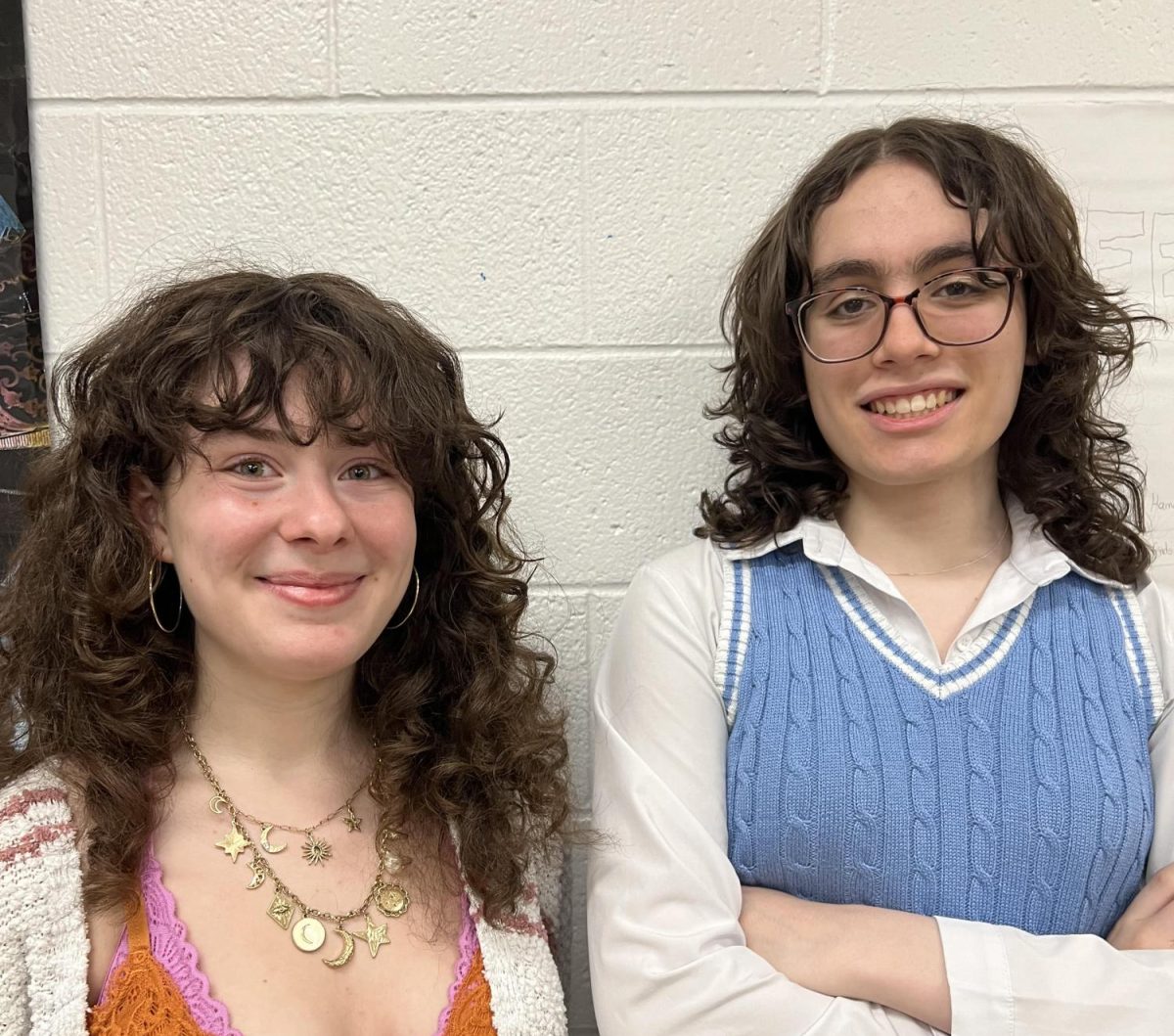
“That’s actually quite surprising to me,” said Caliyiah Brown, a Tallwood Senior, on the subject. When asked if she remembered learning about this or something similar in Biology class, she shook her head. “Not that I can recall.”
“I would definitely be more engaged in my science classes if I had learned facts like that,” she added.
Other students expressed similar opinions. “Whenever I learn about something specific…it keeps me more engaged with what we’re learning in the moment,” said Erika, another Tallwood Senior. “[It] leaves a better memory in my mind.”
How real students opined just goes to show that oversimplifying facts in the classroom only hurts students. When teachers are willing to give the whole story, students have more room to ask thoughtful questions and involve themselves in their own learning.
As students, we should work to advocate for learning about these kinds of facts. The curriculum is there for a reason, sure, but it alone doesn’t get students excited about learning! Teachers should make an effort to keep students at Tallwood engaged by including dynamic information that challenges students’ preconceptions.
So, next time someone asks you how babies are made, you can give them the whole story. Or, at least, a bigger part of it.