
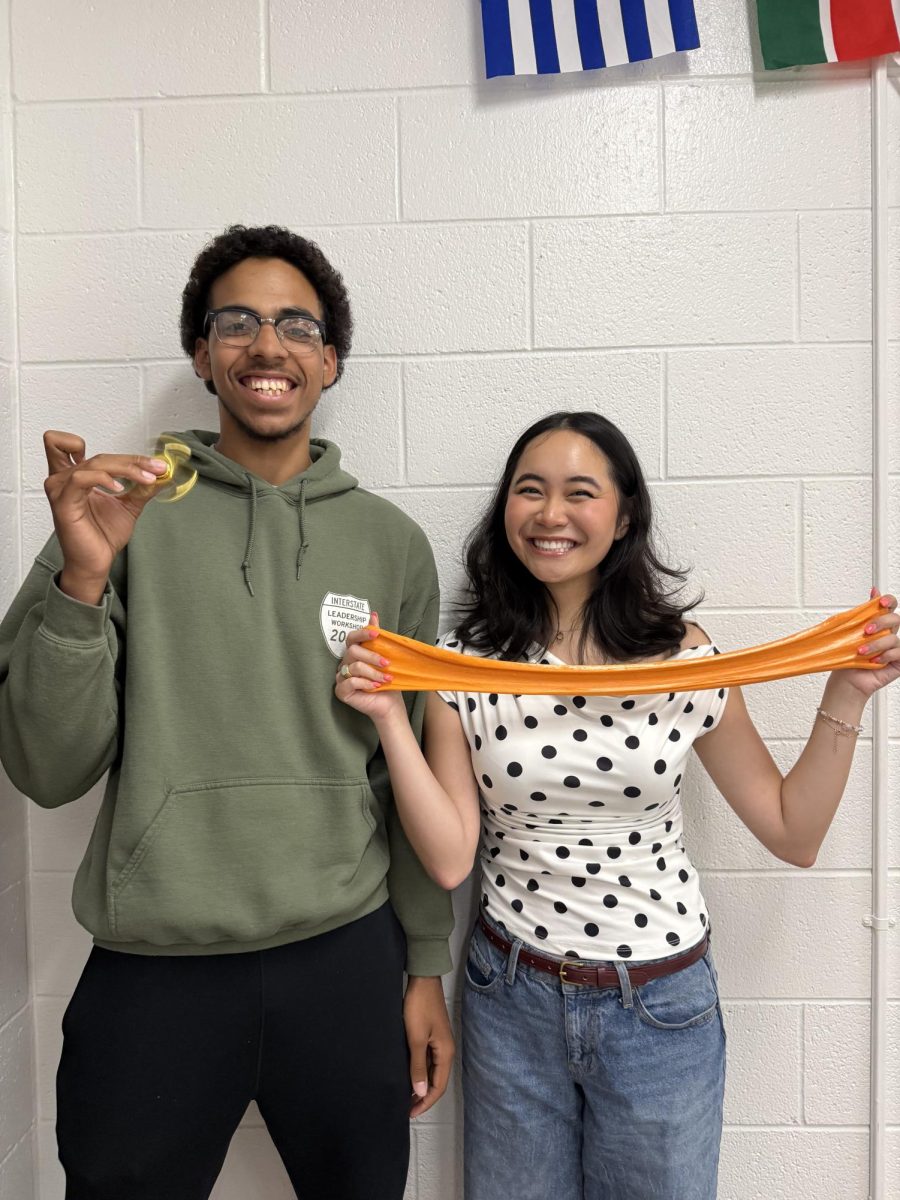
Although their popularity has fluctuated throughout the years, the hype around fidget toys has started to gain momentum once again. Thanks to the latest social media trend of buying NeeDohs and other squishies, fidget toys are now sold in almost every convenience and retail store. Because of this, many stores have openly expressed how overwhelmed they are by the insane demand. Some stores have even taken it a step further by posting signs on their doors indicating the per-customer limit for fidget toys. Now, it is completely normal and socially acceptable for TikTok influencers and even regular people to stand hours outside a single store for a chance to get one of these viral sensations. While I, Linh Truong, have never stood in these lines myself, I can’t lie and say that I haven’t driven from store to store, desperately trying to find an ice cream NeeDoh. In hopes of stumbling across a box full of fidget toys, I have also learned exactly which days certain stores restock their inventory.
However, fidget toys have been around for years now. In 2017, fidget spinners were the topic of every conversation amongst children and teenagers alike. We can still remember the many class periods when we would compete with our friends to see how long we could keep a fidget spinner balanced on our fingers. Without fail, these same friends would come into school carrying around the newest fidget spinners in all shapes and sizes.
Somewhere in the midst of this craze, fidget toys slowly began to shift from their original purpose of being a stress-relieving tool into a classroom distraction for everyone in the same vicinity. I, Linh Truong, can attest to this very fact as I fall victim to the distractions of my friends’ stress toys and gadgets, so much so that I completely push aside the work assignments for that class period. Through both of our experiences, we mutually agreed that the use of fidget spinners served less as a tool to help concentrate in class and more as a distracting toy.
Because fidget toys are starting to appear more in classrooms and on school grounds, the question on whether fidget toys are helpful in academic settings continues to be relevant.
As previously discussed, the newest fidget that is currently dominating the functional market is called NeeDoh. Most commonly bought as a cube, the brand name also sells jellyfish, cake, popsicles, and many other squishy shapes. Similar to fidget spinners, NeeDohs can be helpful or a hindrance. “Fidgets help me focus and concentrate on the task at hand. They help me center my energy into one thing while my mind concentrates.” Amira Amin, a high school student at Tallwood High School, states. “They’re kind of an outlet—something I can do with my hands, so I’m not tempted to be on my phone.” Maddie Moso, interviewed by M-A Chronicle, shares. In the 2025-2026 school year, Virginia enacted a bell-to-bell phone ban, permitting students from having their phones out from the starting bell to the final bell. Because of this ban, students have found other ways to distract themselves. I, Jaden Scott, have seen how students will play with fidgets instead of being on their phones. Rather than reaching for their phones, students can manage their boredom and restlessness by playing with fidget toys.
“I don’t think there is an impact on grades, positive or negative,” said Mr. Paxton, a history teacher at Tallwood High School. “But I do feel that it helps with stress levels and gives students something to help with their anxiety or the need to move around in class.”
Fidget toys can also be a classroom disturbance for fellow peers. “Results indicated that student performance was lower when they were allowed to use fidget spinners than when the fidget spinner was removed,” a 2020 study by the Contemporary School Psychology states. An additional study found that college students who played with a fidget spinner during lectures distracted those around them. College students who used the fidget experienced a “forty-four percent drop in memory retention and content comprehension”, while those sitting near the students experienced a “thirteen percent decrease,” Soares and Storm stated in “Putting a Negative Spin on It.”
“There are students who have accommodations for those things, and there are students who view fidgets more as a distraction than a means of help. Other students see them and think they’re cool, which results in distracting more people in the class,” said Mr. Holland, another teacher at Tallwood High School.
“I think that fidget toys are probably helpful. For me, I don’t like them very much, though,” said Evangeline Torgerson, a Tallwood senior. “I just haven’t had a lot of success with them; they feel more like a toy than a tool. I still fidget with my pencils and pens.”
While the effectiveness of fidget toys in classroom settings remains unclear, the hype doesn’t seem to be dying down anytime soon. The heavy presence of social media doesn’t look like it will be going away either. Ultimately, it all comes down to how fidget toys are used. In classrooms, fidget toys should be used as stress-relieving tools rather than entertainment.