The world always felt cracked in two to me (Ellie), shattering my world. I remember one day in kindergarten, standing on the edge of the school playground at the end of the day, watching other kids leave to go home with their parents while I was waiting for my mom. I saw two parents who looked like them and wondered where my own ‘bridge’ began and ended, as I felt like I was that bridge between both worlds—the past and the future. It wasn’t about love but about belonging—a gap dividing me between the story I lived in my body and the story I saw in the mirror. That feeling, trying to find my way between two different realities—a safe, stable place and a story that made sense—was a part of my identity that I couldn’t fully explain to others who asked, “Why do you look different than your mom?” or “Where’s your dad?”
It wasn’t until I discovered the TV show Arcane that I realized this complicated life doesn’t always have to have the answers. The show explores a central divide, using types of arts such as visual language and filmmaking. The Bridge of Progress separating the utopian Piltover from the undercity, Zaun, became surprisingly similar, mirroring my own progress in fighting the battle between both worlds and making me think, “That character is just like me.” It’s pretty intense that the tragedy of Powder and Vi’s parents and how they ended up being adopted by the tough but super loving Vander gave a powerful, cinematic shape to my own story. Arcane doesn’t just explore complex topics; it provides me with a reflection of myself that I never saw, now understanding chapters of my life being adopted and the journey to finding my identity.
That “mirror” I mentioned? It shows up every year during my extended family’s group picture. Looking at all those photos on the wall is like seeing a “visual oddball” in the timeline—an Asian face in a white family. Since 2008, I’ve basically been the “black sheep” in the family photo, which is a daily reminder of my biological origins and my identity split. Over the last few years, reflecting on my past, I’ve definitely had similar inner battles—feeling abandoned, angry, and hurt. I constantly wonder if my biological parents gave me up because it was the best option for me, or them, or all of us.
I really connected with how Vi does what she thinks is best for her sister, Powder. I want to believe my birth parents struggled with their decision just like she did. As Vi’s actress Hailee Steinfeld said in an interview, “She’s willing to go as far as she can to save her people.” But then there’s the guilt. Co-creator Christian Linke mentioned that Vi is lost because she tried to do the right thing but created a tragedy instead.
Some days I feel exactly like the innocent Powder crying out, “She left me. She’s not my sister anymore!” I just hope my biological parents continue to hold a place for me in their hearts, the way Vi spent years in a “sh*tty prison” on a freezing, bloody floor just thinking about getting back to her sister. I’ll likely never know why I was abandoned, but I’ll never forget them.
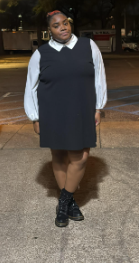
The show also hits on how we present ourselves to the world. My adoptive mother has noticed I prefer gender-neutral, slightly masculine clothes. In Arcane, many characters, including Vi, dress masculine because it’s necessary for survival on the streets—it’s not just for style, but to show they are strong. Art director Julien Georgel says Vi’s “grungy makeup” is a “visual representation for how she’s feeling on the inside” while keeping a gender-neutral tone.
That style gives me comfort, but it also makes me wonder: would my parents have kept me if I were born a boy? If I were biologically male, because of China’s one-child policy and the social preference to carry on a family name, I probably wouldn’t be here questioning who I am at all. Perhaps these events are a correlation between my psychologically wanting some sort of confirmation along with the comfort and safety in how I appear visually.
Arcane’s story of Vi and Powder/Jinx often parallels mine, where I found myself in between the 2 chapters of my life. In the show, the Bridge of Progress was a physical gap between two sides, but it collapsed metaphorically when Vi and Jinx were split forever. My own “bridge” across the ocean was the Social Welfare Institute in China, which allowed me to have a future with my family here.
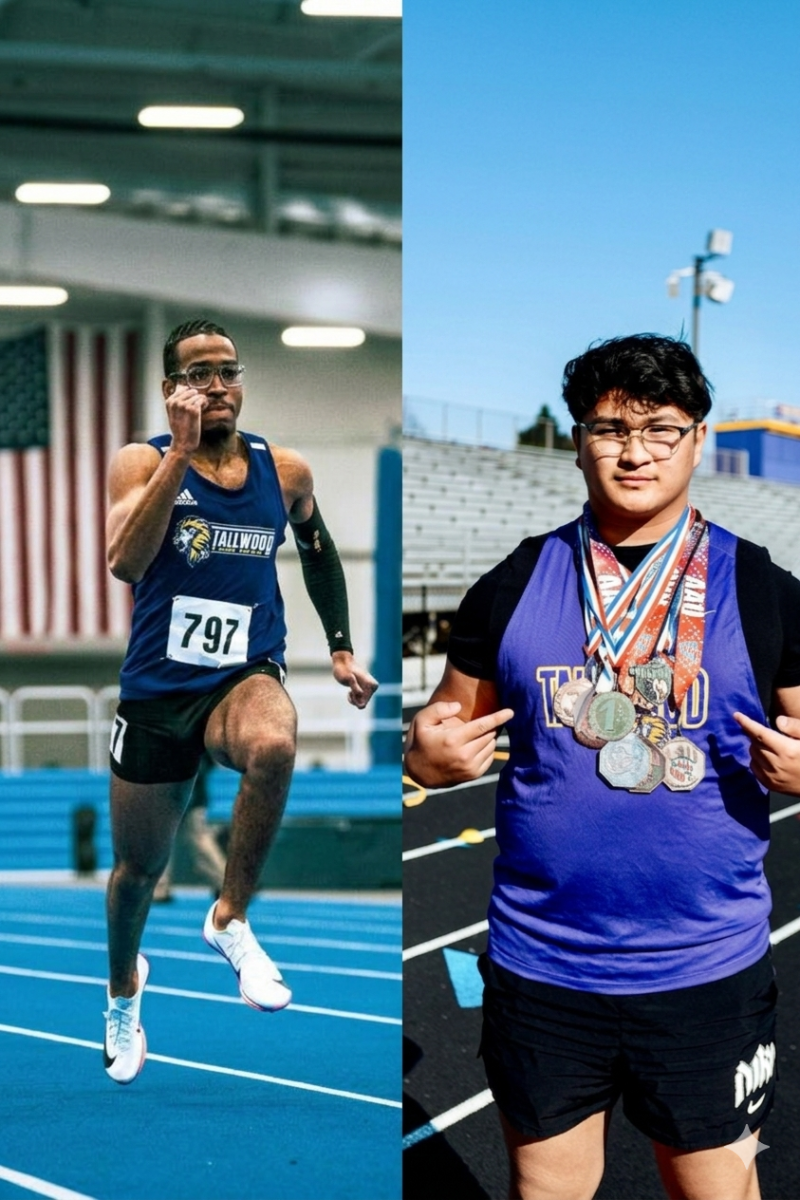
The thing about the Tallwood community, it helped bridge the gap in my life right now. I could drop the facade, forgetting about the one year of the past and learning the languages of code, music, and art while embracing who I am as an individual. Although I’m not an academy student, I still feel like I found my people being surrounded by people like myself in other ways, both globally and personally. Even though I am separated from my own biological family by an ocean, I was able to find people more like me, who looked like me, and who had similar backgrounds at Tallwood High School.
I’m like these characters—asking “What happened?” and “Why me?” while trying to grow without any clear answers. Survival is both a burden and a gift, but looking back, I’m starting to see the beauty in being imperfect.